Well, remember the DS10a will detect a 'transition' from high resistance to low resistance. If the board never gets to the 'high' resistance state (i.e. dry) the DS10a will never see the transition when wet again.
Well, remember the DS10a will detect a 'transition' from high resistance to low resistance. If the board never gets to the 'high' resistance state (i.e. dry) the DS10a will never see the transition when wet again.
Thanks BSR. The way I normally test these is to drop a few drops of water on them. Then use a hair drier to dry them off to reset them. I'm retesting all my sensors again. I took some alchol and cleaned the sensors just in case. I'm beginning to wonder if something was on the sensor under the sink and it was already in a alert state. My logic didn't indicate that but I'm reworking that as well. Thanks for all the help and I'll let you know what I find.
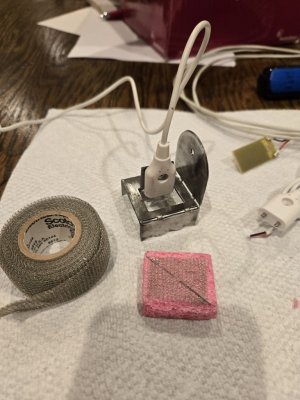
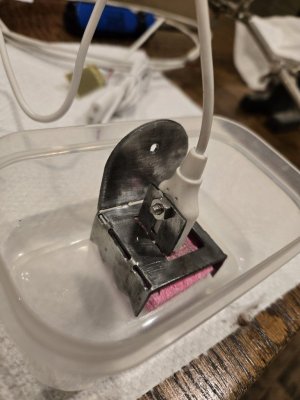
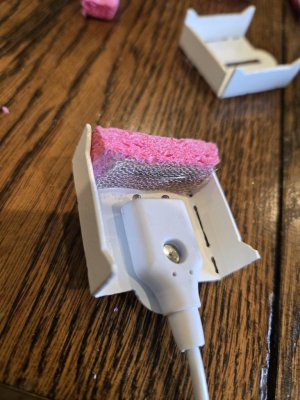
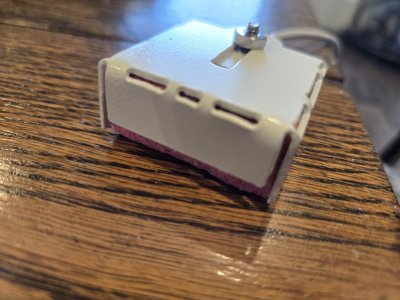
Nothing like resurrecting an old thread that was helpful. Long story short, when wiring my current place, I had planned for leak sensors tied to the Omni Pro. Unfortunately I only did 2-wire to the locations for those sensors. Instead of just grabbing some GRI 2800 2-wire sensors, I decided to go cheap. Using some leaf sensors bought from Hobby-Boards years ago as well as some really cheap leak contacts from Aliexpress I tried to connect to the Omni and a couple DS10 where I don't have wire run. As many ran into, my water here just wont set them off, no matter the salt added. Anyway here is my cheap solution for wiring to the Omni (EOLs used) or the DS10. Using some 3m electrical mesh tape pinned to the sponge to ensure conductivity. They work well especially for slow leaks, which have happened to me in the past. Everything except the leak contacts($20 for 20) from AliExpress, I had on hand. I know this isn't anything new, but sharing anyway.
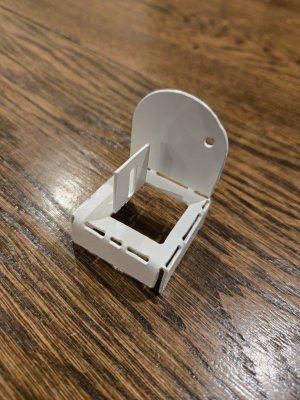
2 versions
Horizontal - good for low profile areas with the leak probe.
Vertical - good with leak probe or leaf sensor. can be screwed to the back of cabinet or wall so it wont move.
These old threads on the HS forum were also helpful
There are a lot of posts on this subject, but unless I missed it, I have not seen a definitive solution using the DS10 as the RF transmitter in a water detection circuit. I have seen where it works for some (not me) without any modifications just dipping the two contacts in water. But depending...
I only used GRI powered sensors near the sump pump wells here connected to the OmniPro 2. It was only 2 of them.
That said DS-10's should work well. An alternative to use would be 433Mhz contact sensors connected to a Tasmota 433Mhz hub. I have a few of these today connected to Home Assistant. Work well. Personally like these better than Zigbee / ZWave wireless sensors.
I only used GRI powered sensors near the sump pump wells here connected to the OmniPro 2. It was only 2 of them.
That said DS-10's should work well. An alternative to use would be 433Mhz contact sensors connected to a Tasmota 433Mhz hub. I have a few of these today connected to Home Assistant. Work well. Personally like these better than Zigbee / ZWave wireless sensors.
The 433Mhz sensors use regular AA or AAA batteries and so far I have two PIRs outside that are still working fine after a year. The sensors are just 433Mhz sensors. The 433Mhz hub has Tasmota firmware.
This is close to the old X10 sensors battery life and much better than the ZWave or Zigbee wireless sensor battery life. Used ZWave sensors (contact and PIR) with a Ring alarm sensor and currently testing Zigbee Wireless sensors (not a happy camper).
This site uses cookies to help personalise content, tailor your experience and to keep you logged in if you register.
By continuing to use this site, you are consenting to our use of cookies.